
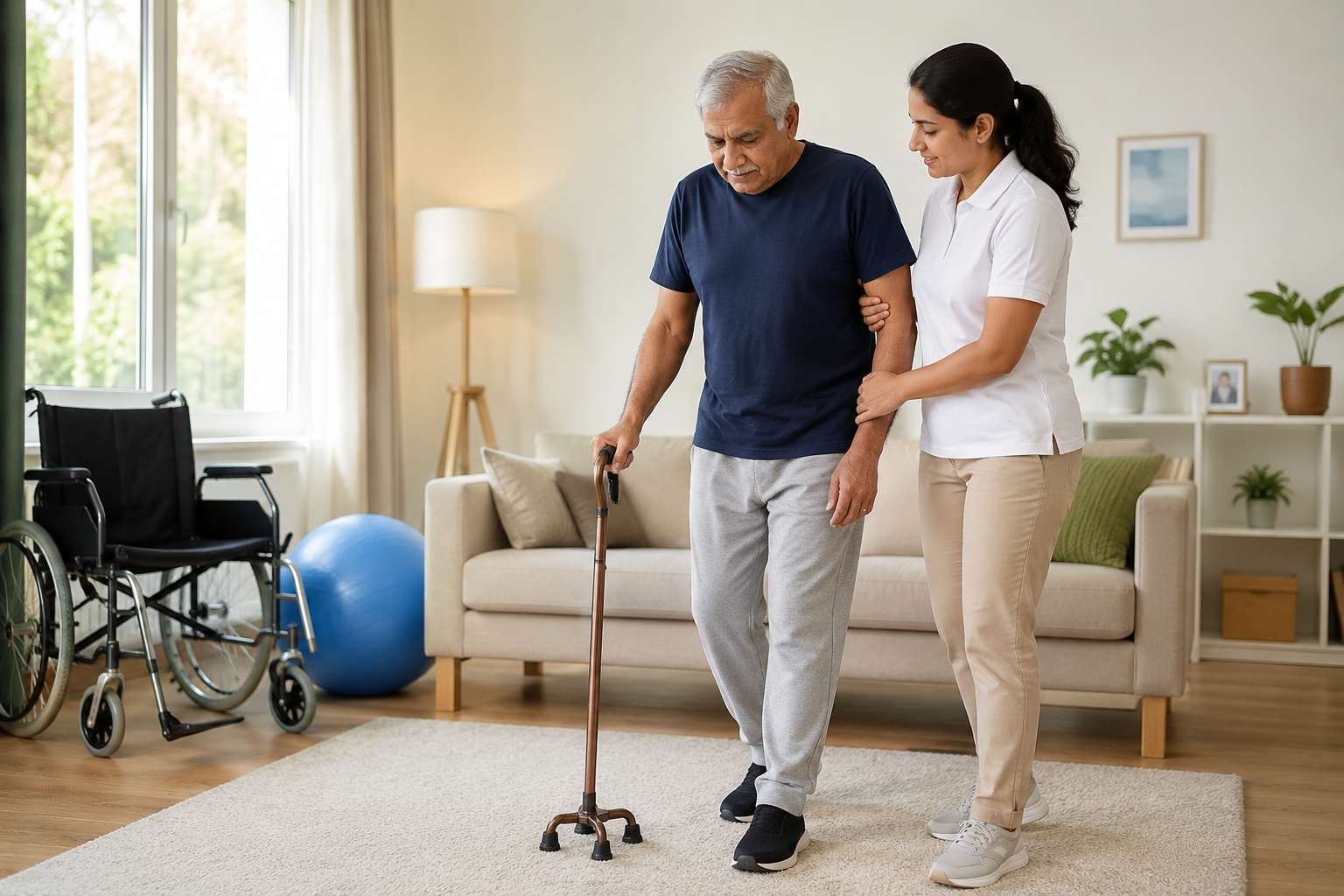
Recovering from a stroke can be a gradual process. Changes in movement, strength, balance, and coordination may make everyday activities more challenging. For many people, continuing rehabilitation in familiar surroundings offers a practical way to work toward greater mobility and independence.
Stroke rehabilitation at home allows individuals to receive professional physiotherapy without the added difficulty of travelling to a clinic. Treatment can focus on the movements and activities that matter in daily life, from getting out of bed and walking safely to using stairs and moving around the home.
At Home Physio Experts, we provide home-based physiotherapy to support people following a stroke, with rehabilitation planned around each person's abilities, needs and recovery goals.
How Can a Stroke Affect Movement and Daily Life?
A stroke affects everyone differently. Depending on the area of the brain involved and the severity of the stroke, a person may experience changes that influence their ability to move confidently and complete everyday tasks.
Common difficulties may include:
Weakness on one side of the body
Reduced balance or coordination
Difficulty standing or walking
Muscle stiffness or changes in muscle tone
Reduced arm or hand function
Fatigue during everyday activities
Difficulty transferring between a bed, chair or toilet
Reduced confidence with movement
Increased risk of falls
These challenges can affect independence at home. A physiotherapist can assess how the person currently moves and develop a rehabilitation programme appropriate for their stage of recovery.
What Is Stroke Rehabilitation at Home?
Home-based stroke rehabilitation involves providing physiotherapy in the person's own living environment rather than requiring regular visits to a clinic.
This approach enables the physiotherapist to see how someone manages real everyday situations. For example, rehabilitation may involve practising standing from the person's usual chair, walking along their hallway, getting in and out of bed, or safely managing their own staircase.
This makes home physiotherapy after a stroke highly relevant to the activities the individual wants or needs to regain.
How Does Physiotherapy Help After a Stroke?
Physiotherapy is commonly used as part of multidisciplinary stroke rehabilitation. The aim is to help a person work on movement and physical function while supporting as much safe independence as possible.
Following an assessment, physiotherapy may address several areas.
Improving Strength and Movement
Muscle weakness can make standing, walking and other daily activities difficult.A physiotherapist may use appropriate exercises and movement practice to work on strength and control. The programme can be adjusted as the person's abilities change.
Rather than simply completing repetitive exercises, rehabilitation can incorporate meaningful tasks that are useful in everyday life.
Practising Walking
Regaining or improving walking and mobility is an important goal for many stroke survivors.
Stroke physiotherapy at home may include practising:
Standing safely
Weight shifting
Taking controlled steps
Changing direction
Walking across different areas of the home
Using appropriate mobility aids
Managing steps or stairs where suitable
The exact activities depend on the person's current mobility, safety, and individual goals.
Working on Balance and Stability
Reduced balance can make someone feel uncertain when standing or moving.
Physiotherapy may use carefully selected balance activities to help improve stability and movement control. Where appropriate, the therapist can also identify situations within the home that may increase the risk of falling.
Practising Transfers
Everyday transfers are essential for independence.
This may include moving:
From sitting to standing
Between a bed and chair
On and off the toilet
In and out of bed
Practising these movements in the person's actual home environment can make rehabilitation particularly relevant to daily routines.
Supporting Arm and Upper-Limb Function
Some people experience weakness or reduced control in an arm following a stroke.
Depending on the person's needs, physiotherapy may include exercises and functional activities designed to encourage movement, positioning, and use of the affected upper limb.
Building Confidence with Everyday Movement
Physical changes following a stroke can sometimes reduce a person's confidence in moving around independently.
Structured practice with a physiotherapist can provide opportunities to work progressively on activities that the individual finds difficult.
Small improvements—such as standing more steadily, transferring with greater control or walking a little further—can make everyday tasks easier to manage.
Why Choose Stroke Rehabilitation at Home?
Travelling to appointments can be difficult for someone experiencing weakness, fatigue, or limited mobility after a stroke. Receiving treatment at home removes this additional challenge.
There are several other potential advantages.
Rehabilitation in Familiar Surroundings
Practising movements where they are actually performed can make sessions highly practical.
Instead of recreating a staircase or bedroom environment in a clinic, the therapist can work with the person's own furniture, rooms and daily routines.
Individual Attention
Home visits provide dedicated time for the physiotherapist to assess the individual's movement and work towards relevant goals.
The rehabilitation plan can therefore reflect the person's abilities rather than following a one-size-fits-all programme.
Greater Focus on Everyday Independence
Recovery is not only about completing exercises. It is also about being able to participate in everyday activities.
Goals might include walking to the kitchen, getting out of a favourite chair, using the stairs or moving safely between rooms.
Support for Family Members and Carers
Where appropriate, a physiotherapist may provide guidance to family members or carers about safe movement, positioning or assisting with exercises.
This can help rehabilitation continue between appointments while ensuring recommendations are suitable for the individual.
What Happens During a Home Physiotherapy Assessment?
Before planning treatment, the physiotherapist needs to understand how the stroke has affected the person's current physical abilities.
A home physiotherapy assessment may consider:
Muscle strength
Range of movement
Sitting and standing balance
Walking ability
Transfers
Coordination
Functional mobility
Current mobility aids
Falls risk
Activities the person wants to improve
The physiotherapist can then discuss realistic goals and develop an appropriate rehabilitation programme.
What Might a Stroke Rehabilitation Programme Include?
There is no single exercise programme suitable for everyone recovering from a stroke.
Depending on the assessment, sessions may include strength exercises, balance practice, walking activities, transfer training, functional movement and guidance for exercises between visits.
Progress can be reviewed over time and activities modified where appropriate.
This personalised approach is important because two people who have experienced a stroke may have very different challenges and rehabilitation priorities.
How Long Does Stroke Rehabilitation Take?
There is no fixed recovery timeline.
Progress following a stroke varies considerably and may be influenced by factors such as the severity and location of the stroke, general health, current mobility, other medical conditions, and participation in rehabilitation.
Some people make noticeable improvements relatively quickly, while others may require longer-term support.
Regular reassessment helps ensure that rehabilitation remains appropriate as abilities and goals change.
When Should Home Physiotherapy Begin After a Stroke?
Stroke rehabilitation often begins in hospital when the medical team considers it safe and appropriate. After discharge, physiotherapy may continue at home or through community rehabilitation services.
Anyone considering private stroke rehabilitation at home should follow the advice of their hospital, GP or healthcare team, particularly if there are medical concerns or recent changes in symptoms.
If a person develops new signs of a stroke—such as sudden facial weakness, arm weakness or speech difficulty—this is a medical emergency and urgent medical assistance should be sought.
Helping You Work Towards Greater Independence at Home
Recovery after a stroke can involve many stages. Having physiotherapy at home allows rehabilitation to focus on the movements and activities that are most relevant to everyday living.
At Home Physio Experts, our physiotherapists provide individual assessments and home-based rehabilitation designed around each person's mobility, physical abilities, and goals.
Whether the priority is improving walking, developing strength, working on balance, or becoming more confident with everyday movement, we aim to provide professional and practical support throughout the rehabilitation journey.
Book a Home Physiotherapy Assessment
If you or a family member needs physiotherapy following a stroke, Home Physio Experts can assess current mobility and discuss an appropriate rehabilitation plan.
Book a home physiotherapy assessment with Home Physio Experts to find out how our team can support recovery, mobility and greater independence at home.
Frequently Asked Questions
Can stroke rehabilitation be provided at home?
Yes. Depending on the person's medical needs and physical abilities, physiotherapy can often be provided at home following discharge from hospital. A physiotherapist can assess mobility and develop an appropriate programme.
Can physiotherapy help someone walk again after a stroke?
Physiotherapy can support recovery of walking ability through activities that address strength, balance, movement control and walking practice. Outcomes vary between individuals, so specific results cannot be guaranteed.
How often should someone have physiotherapy after a stroke?
The appropriate frequency depends on the person's condition, goals, tolerance, and wider rehabilitation plan. A physiotherapist can recommend a suitable approach following assessment.
Is home physiotherapy suitable for elderly stroke patients?
It may be suitable for older adults, particularly when travelling to a clinic is difficult. Suitability should be determined according to the individual's health, mobility, and rehabilitation requirements.
What should I expect during the first home visit?
The physiotherapist will usually discuss the person's medical and rehabilitation history, assess movement and functional abilities, identify difficulties, and agree on appropriate goals before planning treatment.
Medical Disclaimer: This article provides general information and is not a substitute for medical advice, diagnosis, or emergency care. Stroke rehabilitation should be based on individual needs and guidance from appropriate healthcare professionals.