
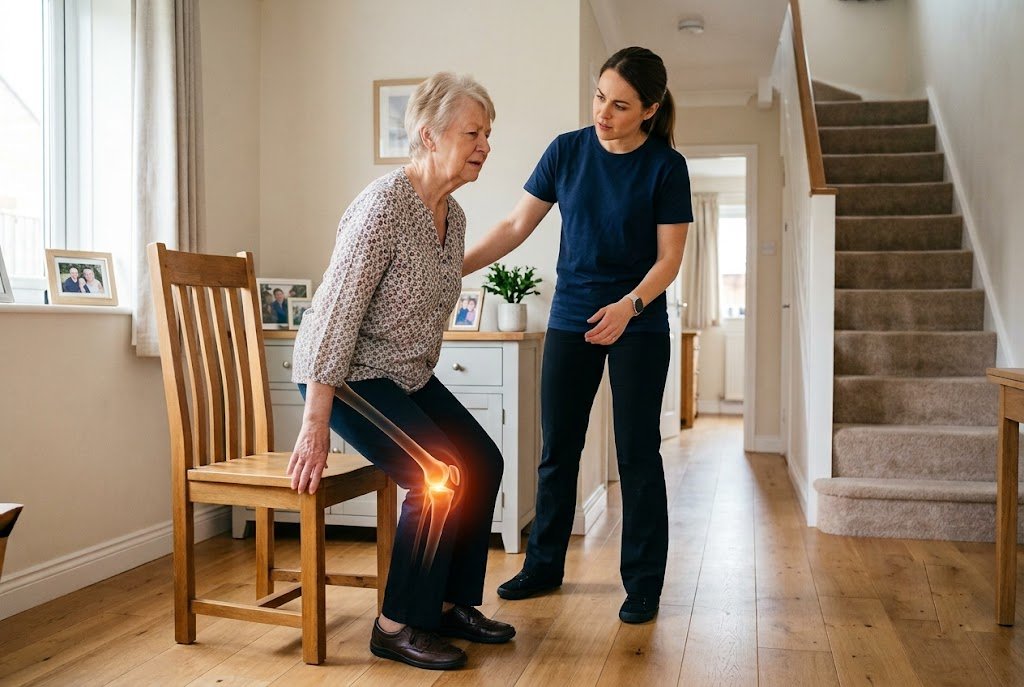
Recovery does not happen in a physiotherapy clinic alone. For many people, the real test begins when they return home.
A person may have enough strength to stand, reasonable balance, and the ability to walk with support. But if the bathroom is difficult to access, stairs are unavoidable, furniture restricts movement, or everyday tasks require more effort than expected, rehabilitation can become much harder.
This is why the home environment and rehabilitation are closely connected.
Sometimes the body has started to recover, but the environment is not supporting that recovery.
Rehabilitation Doesn't End When the Exercise Session Ends
Physiotherapy often focuses on improving strength, balance, flexibility, coordination, and mobility.
But these improvements need to transfer into everyday life. Think about what happens between therapy sessions.
A person may need to:
Get out of bed safely
Walk to the bathroom
Sit down and stand up from a chair
Move around a narrow hallway
Manage stairs
Prepare a meal
Get dressed
Move between rooms
Use a walking aid safely
Complete daily activities without becoming overly tired
These are not simply exercises. They are real-life movement challenges.
If the surroundings make these activities unnecessarily difficult, progress can feel slower even when physical improvements are taking place.
How the Home Environment Can Affect Recovery
Every home is different, so rehabilitation needs can be different too.
1. Clutter Can Restrict Movement
Walking around furniture, boxes, cables, or other household items can make movement more difficult.
For someone with reduced balance or confidence, even a small obstacle may increase the challenge of walking safely.
Creating clear pathways can make everyday movement easier and give a person more opportunities to practise walking independently.
2. Stairs Can Become a Major Barrier
Stairs may not seem difficult under normal circumstances.
After illness, surgery, injury, or a period of reduced activity, however, climbing stairs can require considerable strength, balance, and coordination.
A person may be able to walk reasonably well on a flat surface but struggle with stairs.
This is why rehabilitation should consider the movements a person actually needs to perform at home.
3. The Bathroom Can Present Additional Challenges
Bathrooms often involve several movements close together:
Walking into a confined space
Turning
Sitting down
Standing up
Stepping over surfaces
Maintaining balance on potentially slippery flooring
For someone experiencing weakness or reduced balance, these tasks can become significant obstacles.
A physiotherapist can assess how a person is moving in relation to everyday activities and identify areas that may need attention.
4. Furniture Can Influence How Someone Moves
A low sofa may make standing difficult.
A bed that is too high or too low can make transfers challenging.
A chair without suitable support may make repeated sit-to-stand movements harder.
These details may appear minor, but they can have a meaningful effect on daily mobility.
The Difference Between "Can Do" and "Can Do Safely"
One of the most important aspects of rehabilitation is understanding the difference between physical ability and safe functional ability.
Someone might technically be able to walk from the bedroom to the kitchen.
But can they do it:
Without losing balance?
Without excessive fatigue?
Without holding onto unsuitable furniture?
While using their walking aid correctly?
Without increasing their risk of falling?
Repeatedly throughout the day?
These questions provide a much clearer picture of how someone is functioning at home.
Why Home-Based Physiotherapy Can Be Useful
A clinic-based assessment can provide valuable information about someone's movement.
However, home physiotherapy allows rehabilitation to be considered within the person's actual surroundings.
A physiotherapist may be able to observe:
How someone gets out of bed
How they move between rooms
How they use stairs
How they get in and out of a chair
How they use a walking aid
Where they experience difficulty
Which daily activities require the most effort
This can help connect rehabilitation exercises with practical everyday goals.
For people who find travelling to a clinic difficult, physiotherapy at home can also make accessing rehabilitation more practical.
Rehabilitation Should Fit the Person's Real Life
There is no single home environment or recovery journey.
Someone recovering after a hospital stay may have very different needs from someone managing a long-term mobility problem.
Likewise, rehabilitation for an older adult with reduced balance may involve different priorities from rehabilitation following an orthopaedic procedure.
The goal is not simply to perform exercises correctly.
The goal is to help the person use their physical abilities safely and confidently in the activities that matter to them.
That might mean being able to walk to the bathroom independently, prepare breakfast, climb the stairs, or move around the home with greater confidence.
Small Environmental Changes Can Make Everyday Movement Easier
Depending on the individual's needs, practical changes may include:
Keeping walking routes clear
Improving lighting
Reducing trip hazards
Reviewing furniture placement
Making frequently used items easier to reach
Using appropriate mobility equipment where recommended
Considering suitable bathroom safety measures
Making frequently used areas easier to access
These changes should be considered alongside the person's physical abilities and rehabilitation goals.
A qualified physiotherapist can help identify movement difficulties and discuss appropriate strategies rather than relying on generic advice.
When Should You Consider a Home Physiotherapy Assessment?
A home assessment may be worth considering when someone:
Is struggling with mobility around the house
Has become less active after illness or hospitalisation
Is experiencing difficulty with everyday movements
Has reduced balance or confidence while walking
Finds stairs increasingly difficult
Is using a walking aid and wants to improve safe mobility
Is recovering after surgery or injury
Needs rehabilitation but finds travelling to a clinic difficult
Wants rehabilitation advice based on their actual home environment
The right approach depends on the individual's circumstances, physical abilities, and rehabilitation goals.
How Home Physio Experts Can Help
Home Physio Experts provides home-based physiotherapy for people who may find movement, daily activities, or rehabilitation challenging in their own surroundings. A home physiotherapy assessment allows the physiotherapist to understand how a person moves within their actual home environment, identify practical mobility challenges, and work towards rehabilitation goals that relate to everyday life. Whether someone is recovering after hospital discharge, surgery or injury, or experiencing ongoing difficulties with balance, strength or mobility, a personalised assessment can help determine an appropriate rehabilitation approach.
Home Physio Experts provides physiotherapy at home across East London and surrounding areas, including Walthamstow and Redbridge, helping people work towards safer movement, improved mobility and greater independence in their own environment.
If you or a family member is finding everyday movement difficult at home, contact Home Physio Experts to book a home physiotherapy assessment and discuss whether home-based rehabilitation may be appropriate.
The Environment Should Support Rehabilitation — Not Work Against It
Recovery is not just about what the body can do in a controlled therapy setting.
It is about what a person can safely and confidently do in everyday life.
Sometimes the biggest barrier is not a lack of effort or physical ability. It may be the surroundings in which recovery is taking place.
Understanding that difference can change how rehabilitation is approached.
Instead of only asking:
"How strong is the person?"
we should also ask:
"How well can they use that strength in the environment where they actually live?"
That question can be an important part of meaningful rehabilitation.
Disclaimer: This article is for general information only and should not be considered a substitute for personalised medical or physiotherapy advice. Rehabilitation needs vary from person to person.