
Muscle and joint pain can make everyday activities more difficult. Getting out of a chair, climbing stairs, walking outdoors, reaching overhead, or returning to work and hobbies may become challenging when pain, stiffness, weakness, or reduced mobility develops.
Musculoskeletal rehabilitation at home focuses on helping people improve movement, strength, mobility and physical function in the comfort of their own home. Rather than relying on one treatment, physiotherapy usually involves an individual assessment followed by a rehabilitation programme designed around the person's symptoms, physical abilities and goals.
Therapeutic exercise is often a key part of this approach. Other physiotherapy treatments may sometimes be considered depending on the condition and clinical assessment. Therapeutic ultrasound is one treatment people frequently ask about, although it is not recommended for every musculoskeletal problem.
At Home Physio Experts, our home physiotherapy approach starts with understanding the individual, identifying the difficulties affecting everyday movement, and developing an appropriate rehabilitation plan.
What Is Musculoskeletal Rehabilitation?
Musculoskeletal rehabilitation is designed to help people experiencing problems involving the muscles, joints, bones, tendons and other structures involved in movement.
A musculoskeletal problem may affect your ability to walk comfortably, use the stairs, work, exercise or manage everyday activities independently.
Depending on the individual, musculoskeletal physiotherapy may help with problems such as:
Muscle and joint pain
Reduced strength
Joint stiffness
Reduced mobility
Difficulty walking
Reduced balance and confidence with movement
Recovery following certain injuries
Rehabilitation following surgery
Some sports and activity-related injuries
Age-related changes in strength and mobility
The appropriate treatment depends on the cause of the symptoms. This is why a physiotherapy assessment is important before beginning a rehabilitation programme.
Why Choose Musculoskeletal Rehabilitation at Home?
Travelling to a clinic can be difficult when you are experiencing pain, reduced mobility or recovering from an operation or injury.
With home visit physiotherapy, assessment and rehabilitation can take place in your own environment. This allows your physiotherapist to understand how your condition affects everyday activities such as walking around the home, getting up from a chair, using the stairs and completing daily tasks.
Home-based rehabilitation may be particularly useful for older adults, people with mobility difficulties and anyone who finds travelling to appointments challenging.
Therapeutic Exercise: An Important Part of Musculoskeletal Rehabilitation
Therapeutic exercise is more than simply being told to exercise.
It involves selecting movements and exercises based on your assessment, current ability, and rehabilitation goals. Your physiotherapist can then review your progress and adapt the programme as your strength, mobility, and confidence improve.
Depending on your needs, a therapeutic exercise programme may include:
Strengthening Exercises
Muscle weakness can make everyday movements more demanding.
Appropriate strengthening exercises may be used to gradually improve muscle strength and support activities such as standing from a chair, walking and climbing stairs.
Mobility and Flexibility Exercises
Pain, injury or periods of reduced activity can sometimes lead to stiffness and reduced movement.
Specific exercises may be used to work on joint mobility, flexibility and comfortable movement.
Balance Exercises
For people experiencing reduced balance or confidence when walking, rehabilitation may include exercises designed to challenge and improve balance safely.
Functional Exercises
Rehabilitation should relate to real life.
Functional exercises may therefore focus on activities such as:
Sit-to-stand
Walking
Stair climbing
Reaching
Getting in and out of bed
Everyday household movements
The exercises selected will depend on the person's abilities and rehabilitation goals.
Why Is Exercise So Important?
One of the main goals of musculoskeletal rehabilitation is to help people move and function better rather than simply treating symptoms temporarily.
Regular, appropriately prescribed exercise can play an important role in building strength and maintaining or improving physical function.
For example, NICE recommends tailored therapeutic exercise for people with osteoarthritis, including local muscle strengthening and general aerobic fitness. Exercise is also included in NICE recommendations for managing low back pain and sciatica.
The important word is tailored.
The same exercise programme will not be suitable for everybody. Age, symptoms, strength, mobility, medical history and personal goals can all affect how a rehabilitation programme should be planned.
What Is Therapeutic Ultrasound?
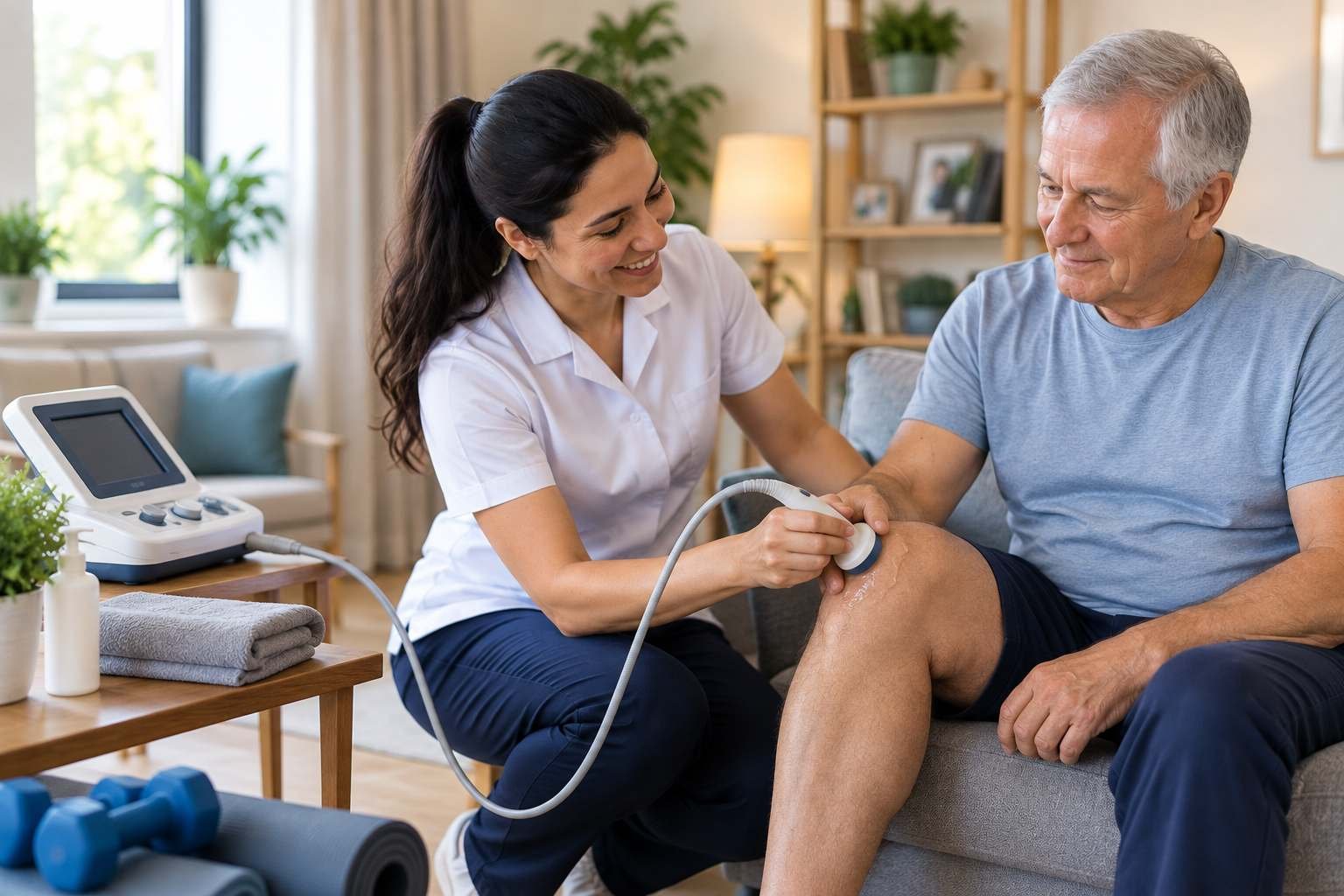
Therapeutic ultrasound is a treatment that uses high-frequency sound waves delivered through a treatment head placed against the skin. A gel is normally applied between the treatment head and skin.
It has historically been used by physiotherapists for various soft-tissue and musculoskeletal problems.
However, ultrasound should not be viewed as a treatment that is automatically appropriate for muscle or joint pain.
Current evidence and clinical guidelines do not support therapeutic ultrasound for several common conditions. For example, NICE recommends not offering ultrasound therapy for osteoarthritis or for low back pain with or without sciatica.
Therefore, whether any physical treatment modality is appropriate should be determined following assessment and according to the individual's condition and current clinical guidance.
At Home Physio Experts, the emphasis of musculoskeletal rehabilitation is on an individualised approach rather than relying on a particular machine or passive treatment.
Therapeutic Exercise vs Ultrasound Therapy: What's the Difference?
Therapeutic exercise is an active form of rehabilitation. The patient participates in specific movements and exercises to work towards improvements in areas such as strength, mobility, balance, and physical function.
Ultrasound is a passive treatment modality in which a device is applied by the clinician.
For many common musculoskeletal conditions, active rehabilitation and exercise have a much stronger role in current clinical guidance.
This is why a good rehabilitation programme should focus on what will help the individual achieve meaningful functional goals rather than automatically using a particular treatment.
What Happens During a Home Physiotherapy Assessment?
Before developing your rehabilitation programme, a physiotherapist will need to understand what is causing you difficulty.
Depending on your symptoms and circumstances, an assessment may look at:
Your current symptoms
When the problem started
Relevant medical history
Pain and stiffness
Joint movement
Muscle strength
Balance
Walking and mobility
Functional activities
Current activity levels
Your personal rehabilitation goals
This information helps the physiotherapist determine an appropriate treatment and exercise programme.
Your progress can then be reviewed over subsequent sessions and your exercises adjusted where appropriate.
Musculoskeletal Rehabilitation for Older Adults
Musculoskeletal rehabilitation can be particularly valuable for older people experiencing reduced strength, stiffness or difficulty with everyday movement.
A period of illness, inactivity or reduced movement can sometimes make normal activities feel more demanding.
A home physiotherapy programme may focus on practical goals such as improving:
Leg strength
Walking ability
Balance
Transfers
Stair mobility
Confidence with movement
Ability to perform everyday activities
Being treated at home also allows rehabilitation to be designed around the person's actual living environment.
Can Home Physiotherapy Help After Surgery or Injury?
Rehabilitation is often an important part of recovery following certain operations and injuries.
Depending on the procedure, injury, and instructions from the medical team, physiotherapy may work towards restoring movement, gradually rebuilding strength, and helping the person return to everyday activities.
Rehabilitation should be appropriate for the stage of recovery. Following surgery in particular, the physiotherapist should consider any precautions or rehabilitation protocols provided by the surgeon or hospital team.
When Should You Consider a Physiotherapy Assessment?
Consider seeking professional advice if muscle or joint problems are affecting your everyday life, particularly if you are experiencing persistent pain or stiffness, reduced movement, weakness, difficulty walking, or difficulty completing normal daily activities.
A physiotherapy assessment can help identify the physical problems affecting your movement and determine whether rehabilitation is appropriate.
Some symptoms require medical assessment rather than routine physiotherapy. Seek urgent medical help for severe or rapidly worsening symptoms, significant unexplained weakness, major trauma, or other symptoms that could indicate a serious medical problem.
Musculoskeletal Physiotherapy in Your Area
If muscle or joint problems are making everyday movement more difficult, receiving physiotherapy at home can make rehabilitation more convenient and relevant to your daily routine.
Home Physio Experts provides musculoskeletal physiotherapy and home rehabilitation across:
Havering
Brentwood
Chelmsford
Waltham Forest
Redbridge
Barking & Dagenham
Milton Keynes
Harrow
Depending on your assessment and individual needs, your rehabilitation programme may include therapeutic exercise, strengthening, mobility work, balance exercises and functional rehabilitation.
Get Musculoskeletal Physiotherapy at Home with Home Physio Experts
You don't necessarily need to travel to a clinic to begin rehabilitation.
Home Physio Experts provides professional physiotherapy assessments and rehabilitation in the comfort of your own home. Our approach focuses on understanding your individual needs and developing a practical rehabilitation programme designed around your mobility, function, and personal goals.
Whether pain, stiffness, weakness, an injury, or recovery from surgery is making everyday movement more difficult, the first step is understanding what is affecting you.
Looking for a home physiotherapist near you? Contact Home Physio Experts today to arrange an assessment and discuss how home-based musculoskeletal rehabilitation may help you.
Frequently Asked Questions
What is musculoskeletal physiotherapy?
Musculoskeletal physiotherapy involves assessing and managing problems affecting muscles, joints and other structures involved in movement. Treatment may include education, therapeutic exercise and other appropriate interventions depending on the condition.
Can a physiotherapist provide musculoskeletal rehabilitation at home?
Yes. Many assessments and rehabilitation exercises can be carried out at home. Home visits can be particularly convenient for people with reduced mobility or those who find travelling difficult.
What exercises are used in musculoskeletal rehabilitation?
Exercises depend on the individual and may include strengthening, mobility, flexibility, balance and functional exercises. A physiotherapist can select and progress exercises according to your needs and goals.
Is therapeutic ultrasound suitable for all joint and muscle pain?
No. Ultrasound is not appropriate or recommended for every musculoskeletal condition. Current NICE guidance specifically advises against therapeutic ultrasound for osteoarthritis and low back pain with or without sciatica. Treatment decisions should be based on an appropriate assessment, current evidence, and the individual's condition.
How long does musculoskeletal rehabilitation take?
There is no single timeframe. Recovery depends on factors such as the condition, severity of symptoms, general health, activity levels, rehabilitation goals, and response to treatment.
Do I need a physiotherapy assessment before starting exercises?
An individual assessment can help determine which exercises are appropriate, particularly if you have significant pain, mobility problems, an injury, recent surgery, or other health conditions.
How do I arrange a home physiotherapy assessment?
Contact Home Physio Experts to discuss your needs and arrange an assessment. Following the assessment, an appropriate rehabilitation plan can be developed around your symptoms, mobility, and goals.
Disclaimer: Physiotherapy treatment and outcomes may vary depending on individual needs and conditions.