
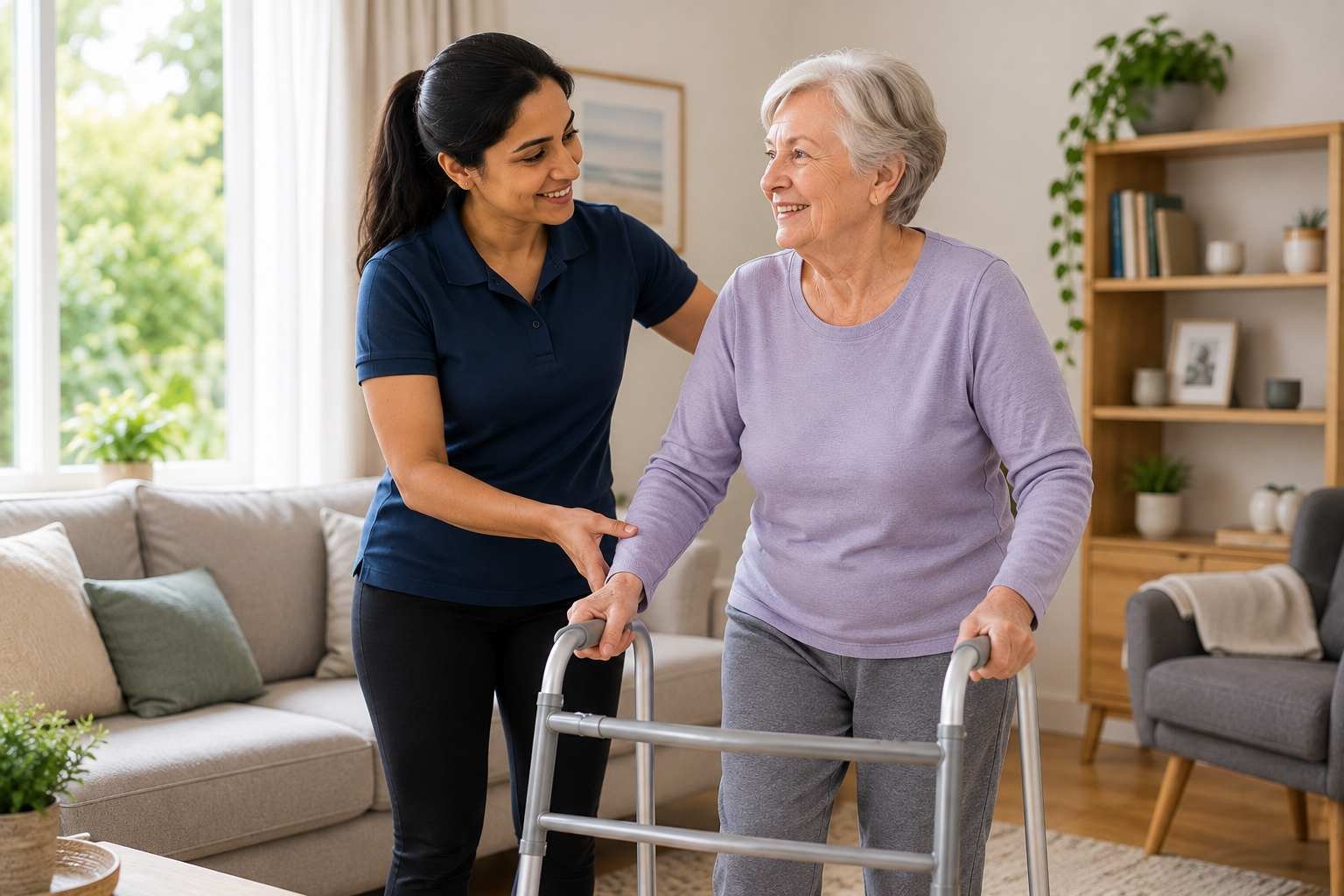
Walking is something many of us take for granted until pain, weakness, stiffness, or balance problems make everyday movement more difficult.
You may notice that you're walking more slowly, avoiding stairs, holding onto furniture, feeling unsteady, or becoming tired after a short distance. These changes can affect your confidence and make everyday activities more challenging.
Home physiotherapy can be a convenient way to receive professional assessment and rehabilitation without travelling to a clinic. A physiotherapist can assess your movement, strength, balance and functional abilities, then develop a rehabilitation plan around your individual needs and goals.
At Home Physio Experts, we provide one-to-one home physiotherapy to support people who want to improve their mobility, walking ability, strength and confidence in their own home.
What Can Affect Your Walking and Mobility?
Difficulty walking doesn't always have one single cause. Changes in mobility can be associated with:
- Muscle weakness
- Joint pain or stiffness
- Previous injuries
- Arthritis
- Recovery after surgery
- Stroke or neurological conditions
- Reduced balance
- Fear of falling
- Reduced physical activity
- Age-related changes
A physiotherapy assessment can help identify the factors affecting your movement and determine what type of rehabilitation may be appropriate.
Physiotherapy is commonly used to help people improve movement, strength and function following injury, illness, disability or surgery.
1. Improving Muscle Strength
Strong muscles are important for everyday movements such as standing from a chair, climbing stairs and walking.
If your leg muscles have become weaker because of inactivity, illness, injury or surgery, everyday activities may require more effort.
A physiotherapist can assess your strength and introduce appropriate strengthening exercises based on your current ability. Exercises can then be progressed gradually as your strength and confidence improve.
The aim isn't simply to make you stronger—it is to help you use that strength during meaningful everyday activities.
2. Improving Balance and Stability
Good balance helps you move safely and confidently.
Balance can be affected by muscle weakness, joint problems, changes in sensation, neurological conditions, or previous falls.
During a home physiotherapy assessment, your physiotherapist may look at how you stand, turn, walk and move between different positions.
Your rehabilitation programme may include balance exercises, strengthening activities and functional movement practice where appropriate.
If you're concerned about falling, a professional assessment is important rather than relying on generic exercises. The Chartered Society of Physiotherapy recommends a comprehensive falls assessment from a qualified healthcare professional when someone is concerned about their risk of falling.
3. Supporting Better Walking
Walking difficulties can look different from person to person.
You might:
- Take shorter steps
- Walk more slowly
- Feel unsteady when turning
- Struggle with stairs
- Need to hold onto furniture
- Avoid walking outside
- Become tired quickly
A physiotherapist can assess your walking pattern and identify areas that may benefit from rehabilitation.
Depending on your needs, treatment may include walking practice, strengthening, balance exercises, mobility work and advice about safe movement.
For some people, an appropriate walking aid may also provide additional support. Walking aids should be assessed and fitted correctly rather than chosen simply because they are available.
4. Helping You Move More Confidently
Pain or a previous fall can sometimes make people nervous about moving.
You may start avoiding activities because you're worried about falling or making your pain worse. Over time, becoming less active can contribute to further weakness and reduced mobility.
Physiotherapy can help you understand your movement limitations and work towards realistic goals through a gradual rehabilitation programme.
Your goals might be as simple as:
Getting out of a chair → Walking around your home → Using the stairs → Going outside independently
The right goal is different for every person.
5. Supporting Recovery After Surgery
Surgery can temporarily affect your strength, mobility and confidence.
For example, following a knee or hip replacement, you may need rehabilitation to help restore movement and strength and return to everyday activities.
Home physiotherapy can provide rehabilitation in the environment where you actually need to move. Your physiotherapist can consider activities such as getting in and out of a chair, walking around your home and using stairs as part of your functional goals.
Physiotherapy is commonly used to improve movement, strength and stamina following surgery.
6. Helping Older Adults Maintain Independence
Changes in strength and balance can make everyday activities more difficult as we get older.
Physiotherapy can support older adults who want to maintain their mobility and independence.
Treatment may focus on:
- Strength
- Balance
- Walking
- Transfers
- Flexibility
- Confidence
- Functional activities
The goal is not simply exercise for exercise's sake. Rehabilitation should focus on the movements and activities that are important to you.
7. Why Home Physiotherapy Can Be Helpful
One of the main advantages of physiotherapy at home is convenience.
Travelling to a clinic can be difficult for someone with significant pain, reduced mobility, recent surgery, or a neurological condition.
With a home visit, your physiotherapist can assess you in your usual environment and consider how you manage everyday activities at home.
For example, instead of only discussing the difficulty of getting up from your sofa, your physiotherapist can observe your movement and provide practical guidance tailored to your individual situation.
The NHS notes that physiotherapists may be able to visit people at home when their condition makes travelling to a GP surgery or hospital difficult.
What Happens During a Home Physiotherapy Assessment?
Your first appointment should begin with understanding you, not simply treating a symptom.
Your physiotherapist may ask about:
- Your current symptoms
- Previous injuries or surgery
- Medical history
- Your usual level of activity
- Difficulties with walking or daily activities
- Your rehabilitation goals
They may then assess areas such as:
Strength • Balance • Joint movement • Flexibility • Walking • Functional mobility
Your physiotherapist can then discuss their findings with you and recommend an appropriate treatment and rehabilitation plan.
This approach is important because two people with the same complaint—for example, difficulty walking—may have very different underlying factors and rehabilitation needs.
The NHS describes physiotherapy assessments as including discussion of symptoms, medical history, and lifestyle, with assessment of factors such as strength and balance where appropriate.
Who May Benefit From Home Physiotherapy?
Home physiotherapy may be particularly useful for people who:
- Have difficulty walking
- Have reduced mobility
- Are recovering from surgery
- Have experienced a fall
- Have balance problems
- Are living with arthritis
- Have muscle weakness
- Are recovering from a stroke
- Have a neurological condition affecting movement
- Find travelling to a clinic difficult
- Want support maintaining their independence
However, home physiotherapy isn't appropriate for every situation. A physiotherapist should assess your individual circumstances and determine whether physiotherapy is suitable for you.
Home Physiotherapy in Your Area
Home Physio Experts provides professional home physiotherapy and rehabilitation through one-to-one home visits.
Our services can support people working towards improved mobility, walking ability, strength, balance and independence, depending on their individual needs.
We provide home visits across:
Havering | Brentwood | Chelmsford | Waltham Forest | Redbridge | Barking & Dagenham | Harrow | Milton Keynes
Our approach focuses on understanding your goals and providing rehabilitation that fits into your everyday life.
When Should You Seek Professional Advice?
Don't ignore a significant change in your ability to walk or move.
Consider seeking professional advice if:
- Your walking ability has noticeably changed
- Pain is affecting your daily activities
- You repeatedly feel unsteady
- You've recently experienced a fall
- You're struggling with stairs or getting out of a chair
- You're losing confidence in your mobility
- Your recovery after surgery isn't progressing as expected
If walking difficulty develops suddenly, particularly alongside symptoms such as facial weakness, arm weakness or difficulty speaking, seek urgent medical attention rather than arranging a routine physiotherapy appointment.
Frequently Asked Questions
Can physiotherapy improve walking ability?
Physiotherapy can help address factors that affect walking, such as muscle weakness, reduced joint movement, balance difficulties and movement patterns. Your physiotherapist will determine the appropriate approach following an assessment.
Can physiotherapy help with balance problems?
Yes, balance assessment and appropriate balance and strengthening exercises can form part of physiotherapy rehabilitation. The exercises should be selected according to your abilities and underlying condition.
Is home physiotherapy suitable for older adults?
It can be particularly useful for older adults who have mobility difficulties, reduced confidence, balance problems or difficulty travelling to a clinic. An assessment can determine whether home physiotherapy is appropriate.
Can I receive physiotherapy at home after surgery?
Home physiotherapy may be suitable during recovery from some types of surgery. Your rehabilitation should follow the advice provided by your surgical or medical team and be adapted to your stage of recovery.
How often will I need home physiotherapy?
There isn't one schedule that works for everyone. The frequency of appointments depends on your condition, goals, progress and rehabilitation needs. Your physiotherapist can discuss this with you after your assessment.
Final Thoughts
Walking and mobility problems can gradually affect your independence, confidence and quality of life. You don't necessarily have to wait until movement becomes severely restricted before seeking professional advice.
A home physiotherapy assessment can help identify factors affecting your walking, balance and mobility and provide a rehabilitation plan based on your individual needs.
If you're looking for home physiotherapy in Havering, Brentwood, Chelmsford, Waltham Forest, Redbridge, Barking & Dagenham, Harrow or Milton Keynes, Home Physio Experts can provide professional physiotherapy in the comfort of your own home.