
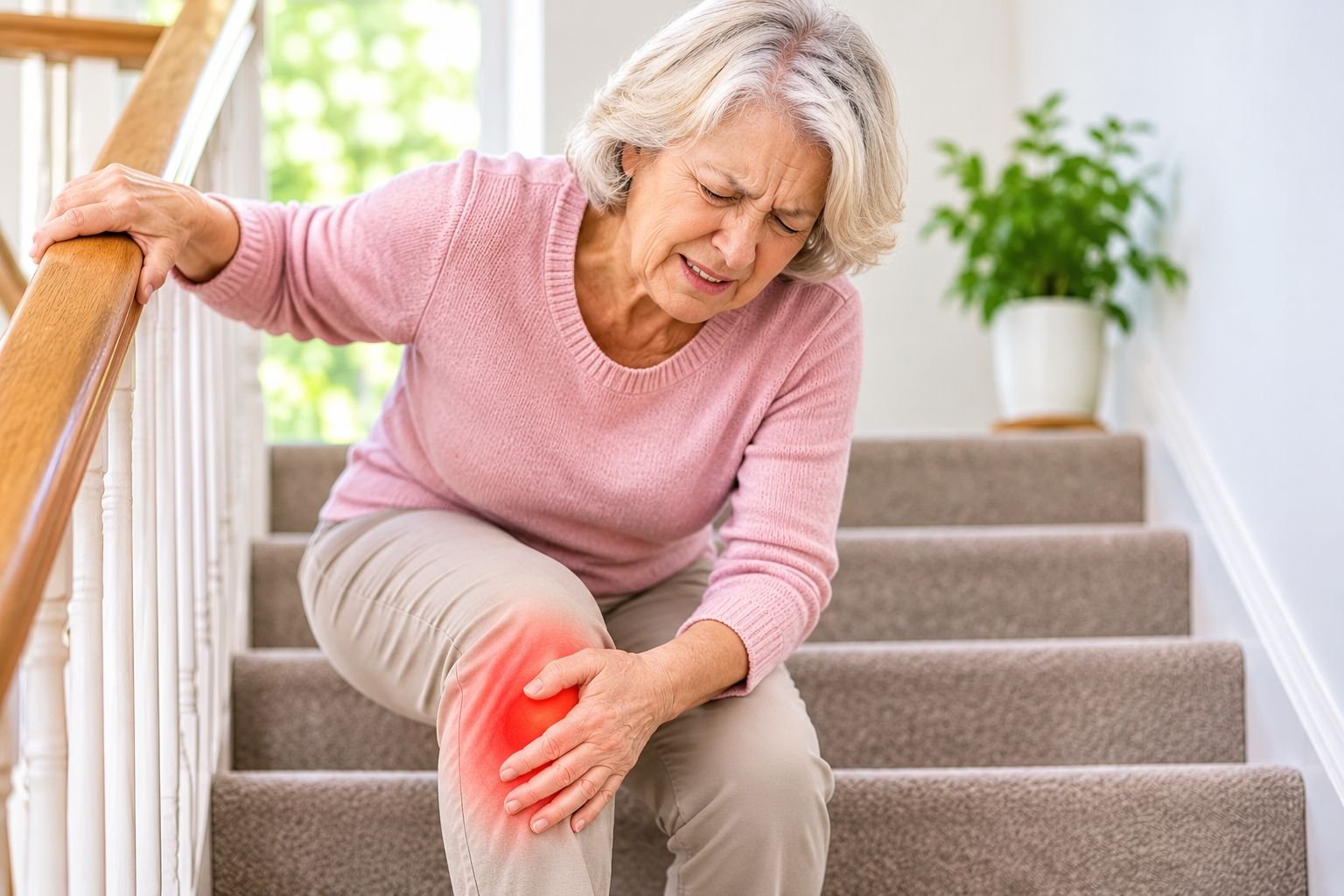
Have you noticed knee pain when walking, climbing stairs, or getting up from a chair? Your knee may feel stiff after sitting for a long time, hurt when you bend it, or make everyday activities harder than they used to be.
Knee pain is common and can affect people of all ages. Sometimes it develops gradually without an obvious injury. In other cases, it starts after a fall, sudden movement, exercise, or an increase in physical activity.
Although occasional discomfort may settle on its own, persistent knee pain should not be ignored, particularly when it begins to affect your walking, balance, or independence.
Knee pain can affect your ability to walk, climb stairs, and carry out everyday activities. Home physiotherapy can help assess your symptoms and create a treatment plan suited to your needs.
Understanding what may be causing your knee pain is an important first step towards finding the right treatment.
In this guide, we explore the common causes of knee pain when walking or climbing stairs, symptoms to look out for, practical ways to manage discomfort, and how physiotherapy can help you move more comfortably.
Why Does Your Knee Hurt When Walking or Climbing Stairs?
Your knee is a complex joint that helps support your body weight and allows you to perform everyday movements such as walking, standing, bending, and climbing stairs.
It consists of bones, cartilage, ligaments, tendons, and surrounding muscles that work together to provide stability and movement.
When one or more of these structures becomes irritated, injured, or affected by a long-term condition, you may experience knee pain.
You might notice discomfort when:
Walking for long distances or standing for extended periods.
Going upstairs or downstairs.
Getting up from a chair or sofa.
Bending or straightening your knee.
Squatting, kneeling, or getting down onto the floor.
Getting out of bed in the morning.
Returning to exercise after a period of inactivity.
The location and nature of your pain can provide useful clues, but they do not always identify the exact cause. A proper assessment is important to understand what is happening.
7 Common Causes of Knee Pain
Knee pain can develop for several reasons. Some problems affect the kneecap, while others involve the cartilage, tendons, ligaments, or the joint itself.
Here are seven common causes worth understanding.
1. Knee Osteoarthritis
Osteoarthritis is one of the common causes of knee pain, particularly among older adults.
It is a condition that affects the whole joint, including the cartilage, surrounding bone, and other joint structures.
People with knee osteoarthritis may experience:
Pain during walking or climbing stairs.
Stiffness after sitting or resting.
Swelling around the knee.
Difficulty bending or straightening the leg.
A grinding or creaking sensation when moving the knee.
The discomfort may develop gradually and can make everyday activities increasingly challenging.
However, osteoarthritis does not mean that you must stop being active. Appropriate exercise and strengthening can help improve joint function, manage pain, and maintain mobility.
2. Patellofemoral Pain (Pain Around the Kneecap)
Patellofemoral pain refers to discomfort around or behind the kneecap.
It is commonly associated with activities that place greater demands on the knee, such as:
Climbing or descending stairs.
Squatting.
Running or jumping.
Sitting for long periods with the knees bent.
Repeatedly bending and straightening the knee.
Some people describe this as a dull ache at the front of the knee.
Changes in activity levels, reduced strength in the thigh or hip muscles, and how the knee responds to repeated loading may all contribute.
A physiotherapist can assess your movement and strength to help identify factors that may be contributing to the discomfort.
3. Meniscus Injury
The meniscus is a type of cartilage inside the knee that helps distribute weight and absorb forces during movement.
A meniscus injury can happen following a sudden twisting movement, particularly during sports or physical activities. Changes in the meniscus can also occur gradually over time.
Possible symptoms include:
Pain along the inner or outer side of the knee.
Swelling or stiffness.
Discomfort when twisting or squatting.
Difficulty fully bending or straightening the knee.
A catching or locking sensation.
Not every meniscus change requires surgery. The appropriate management depends on the symptoms, injury, and individual assessment.
4. Tendon Problems
Tendons connect muscles to bones and help transfer force during movement.
The patellar tendon, which connects the kneecap to the shinbone, can become irritated through repeated loading or physical activity.
This may cause pain just below the kneecap, particularly when:
Climbing stairs.
Running or jumping.
Squatting.
Getting up from a seated position.
People who suddenly increase their exercise intensity may be more likely to experience tendon-related discomfort.
Managing activity levels and gradually rebuilding strength can form important parts of recovery.
5. Ligament Injuries
Ligaments help hold the knee joint together and provide stability.
Injuries to ligaments such as the anterior cruciate ligament (ACL) or medial collateral ligament (MCL) can occur during sports, falls, or sudden changes in direction.
Depending on the injury, symptoms may include:
Sudden knee pain.
Swelling after an injury.
A feeling that the knee is unstable.
Difficulty putting weight through the affected leg.
Reduced confidence when walking.
Significant ligament injuries need appropriate medical assessment before beginning a rehabilitation programme.
6. Muscle Weakness Around the Knee
The muscles around your hips, thighs and knees play an important role in supporting movement.
When these muscles become weaker, everyday activities may feel more demanding.
You might notice:
Difficulty climbing stairs.
Pain or discomfort when standing up from a chair.
Reduced walking endurance.
Difficulty controlling your knee during movement.
Feeling less stable when walking.
Muscle weakness may develop after illness, surgery, prolonged inactivity or as part of the ageing process.
A physiotherapy assessment can help identify areas of weakness and guide an appropriate strengthening programme. Learn more about deconditioning after illness or hospitalisation.
7. Bursitis Around the Knee
Bursae are small fluid-filled sacs that help reduce friction between tissues around joints.
When a bursa becomes irritated or inflamed, it can cause pain and swelling.
Knee bursitis may develop following repeated kneeling, direct pressure, or an injury.
Symptoms can include:
Swelling at the front or around the knee.
Tenderness when touching the affected area.
Discomfort when kneeling or bending.
Localised warmth.
A hot, red, and significantly swollen knee, particularly with fever or feeling unwell, requires urgent medical assessment rather than routine physiotherapy.
Why Does Knee Pain Get Worse When Climbing Stairs?
Climbing stairs requires your knee to bend while supporting and moving your body weight.
Your thigh and hip muscles also work harder to control the movement and keep your body stable.
If your knee is already sensitive, stiff, or painful, these movements can increase discomfort.
Common contributing factors include:
Reduced muscle strength: Weakness in the quadriceps and hip muscles can make stair climbing more demanding.
Kneecap-related pain: Conditions such as patellofemoral pain can cause discomfort around or behind the kneecap during stair climbing.
Knee osteoarthritis: Changes within the joint may cause pain, stiffness, and reduced movement.
Tendon irritation: Repeated loading of the knee extensor mechanism may aggravate tendon-related symptoms.
You may also find that going downstairs feels more uncomfortable than going upstairs because your muscles need to control your body's movement as you lower yourself.
If stairs have become difficult, using a handrail and taking your time can help improve confidence while you seek appropriate advice.
Why Does My Knee Hurt When Standing Up After Sitting?
Do you experience knee pain when getting up from a chair, sofa, or car seat?
This is another common complaint, particularly among people with knee joint problems.
When you sit for a long time, your knee remains bent. Standing up requires your thigh and hip muscles to work together to straighten your leg and support your body weight.
Discomfort during this movement may be associated with:
Knee osteoarthritis.
Patellofemoral pain.
Reduced thigh muscle strength.
Joint stiffness after inactivity.
Increased sensitivity to physical activity.
If the discomfort happens regularly or makes it difficult to stand independently, a physiotherapist can assess your knee movement, strength, and functional ability.
What Can You Do to Manage Knee Pain?
The right approach depends on what is causing your symptoms.
However, some practical changes may help reduce discomfort and make everyday movement easier.
1. Keep Moving Within Your Comfort Level
Avoiding all movement for long periods can contribute to stiffness and reduced muscle strength.
Gentle activities, such as short walks or comfortable knee movements, may help you maintain mobility.
If walking is painful, try shorter distances and gradually increase your activity as your symptoms allow.
2. Avoid Suddenly Increasing Physical Activity
Doing too much too soon can aggravate knee discomfort.
For example, suddenly increasing your walking distance, spending longer periods climbing stairs, or returning to intense exercise may place more demands on your knee than it is currently able to tolerate.
Increase activity gradually and allow your body time to adapt.
3. Use Support When Climbing Stairs
If you feel uncomfortable or unsteady when using stairs:
Hold the handrail where available.
Take one step at a time if necessary.
Avoid rushing.
Wear comfortable, supportive footwear.
If using stairs is unsafe or you feel your knee may give way, seek professional advice.
4. Consider Cold or Warm Applications
A cold pack wrapped in a towel may help ease discomfort and swelling following an activity-related flare-up.
Some people find gentle warmth more comfortable when experiencing stiffness.
Avoid placing ice or heat directly onto your skin, and stop if the application causes discomfort.
5. Maintain a Healthy Activity Routine
Regular movement supports muscle strength, joint function and general health.
Choose activities that suit your current ability and gradually build up your activity levels.
If you have persistent knee pain, individual advice from a healthcare professional can help you find a suitable starting point.
Which Exercises May Help With Knee Pain?
Exercise is an important part of managing many types of knee problems, including knee osteoarthritis.
The aim is to improve strength, movement, and confidence when performing everyday activities.
Some exercises that a physiotherapist may consider include:
1. Seated Knee Extensions
Sit comfortably on a stable chair.
Slowly straighten one knee.
Pause briefly if comfortable.
Lower your foot back towards the floor.
Repeat on the other leg.
This exercise works the quadriceps muscles at the front of your thigh.
2. Static Quadriceps Contractions
Sit or lie with your affected leg comfortably straight.
Gently tighten the muscles at the front of your thigh.
Hold the contraction briefly.
Relax and repeat if comfortable.
This helps activate the quadriceps without requiring repeated knee bending.
3. Sit-to-Stand Practice
Sit on a stable chair with your feet positioned comfortably.
Lean slightly forward.
Push through your feet to stand up.
Slowly lower yourself back onto the chair.
This movement helps strengthen the muscles used during everyday activities.
Only attempt this if you can do so safely, using support if needed.
Important: These are general examples, not a personalised treatment programme. Not every exercise is suitable for every knee condition. If you experience increased pain, swelling, or instability, stop and seek professional advice.
A physiotherapist can recommend exercises based on your symptoms, strength, movement, and rehabilitation goals.
When Should You See a Physiotherapist for Knee Pain?
Occasional knee discomfort may improve with appropriate activity adjustments. However, persistent or recurring pain deserves attention.
Consider arranging a physiotherapy assessment if:
Your knee pain continues for several weeks.
Walking or climbing stairs has become difficult.
You experience recurring swelling or stiffness.
You struggle to get up from a chair.
Your knee feels weak or unstable.
You have reduced your usual activities because of pain.
Knee discomfort is affecting your sleep or quality of life.
Early assessment can help identify contributing factors and determine an appropriate management plan.
When to seek urgent medical attention
Some knee symptoms require urgent medical advice rather than a routine physiotherapy appointment.
Your knee becomes hot, red and significantly swollen, especially if you have a fever or feel unwell.
You cannot put weight on your leg or walk following an injury.
Your knee suddenly locks, and you cannot straighten it.
You experience significant swelling following a fall or twisting injury.
Your knee repeatedly gives way and causes you to fall.
Do not delay medical assessment when these symptoms occur.
How Can Physiotherapy Help With Knee Pain?
Knee pain can affect more than just your ability to walk. It may make shopping, climbing stairs, getting dressed, exercising, or looking after your home more difficult.
Physiotherapy focuses on understanding why movement has become difficult and helping you work towards improving your physical function.
A physiotherapist may help through:
1. Individual Assessment
Your physiotherapist will discuss your symptoms, medical history and daily activities. They may assess your knee movement, muscle strength, balance and walking pattern.
2. Personalised Exercise Programme
Exercises can be selected to improve the strength of the muscles around your knee and hips, support joint function and help you regain confidence in movement.
3. Pain Management Advice
You may receive guidance on activity modification, pacing, movement and ways to manage everyday discomfort.
4. Mobility and Functional Training
Your programme may include practising movements such as standing from a chair, walking and using stairs safely.
5. Rehabilitation and Progress Monitoring
Your physiotherapist can review your progress and adjust your programme as your strength, mobility and confidence improve.
The treatment approach will depend on your condition, individual needs and goals.
Home Physiotherapy for Knee Pain in East London
Travelling to a clinic can be challenging when you are experiencing knee pain, particularly if walking, using public transport or climbing stairs is uncomfortable.
Home physiotherapy offers an alternative for people who would benefit from receiving rehabilitation in their own surroundings.
Home Physio Experts provides home physiotherapy services for people who need support with pain management, mobility, strengthening and rehabilitation.
Our approach focuses on understanding each person's difficulties and working towards practical goals that make everyday life easier.
A home physiotherapy assessment may help you:
Understand the factors contributing to your knee pain.
Identify movement and strength difficulties.
Receive an exercise programme suited to your needs.
Improve confidence when walking and using stairs.
Work towards greater independence with everyday activities.
We support people across our East London service areas. If knee pain is affecting your daily routine, our team can discuss your needs and available home physiotherapy appointments.
Don't let knee pain unnecessarily limit your everyday activities.
Contact Home Physio Experts to discuss your symptoms and arrange a home physiotherapy assessment.
Phone: 07438605593 | 07448114009
Frequently Asked Questions About Knee Pain
1. Why does my knee hurt when walking but not when sitting?
Knee pain may become more noticeable when walking because the joint and surrounding muscles have to support your body weight and control movement. Possible causes include osteoarthritis, kneecap-related pain, tendon problems, and muscle weakness.
2. Why does my knee hurt when climbing stairs?
Climbing stairs places additional demands on the knee and the muscles around it. Patellofemoral pain, knee osteoarthritis, and reduced muscle strength are some possible contributing factors.
3. Is knee pain when walking a sign of arthritis?
Not necessarily. Knee pain can have several causes, including muscle weakness, tendon irritation, meniscus problems, and kneecap-related pain. A clinical assessment can help identify the likely cause.
4. Can physiotherapy help with knee osteoarthritis?
Yes. Physiotherapy can help people with knee osteoarthritis improve strength, movement, and physical function. Individualised therapeutic exercise is a core part of osteoarthritis management.
5. What exercises are good for knee pain?
Depending on the cause of your symptoms, exercises such as seated knee extensions, quadriceps contractions, and sit-to-stand practice may be useful. A physiotherapist can recommend appropriate exercises for your condition.
6. Should I keep walking if my knee hurts?
In many cases, gentle movement and appropriately adjusted activity are helpful. However, you should avoid pushing through severe or worsening pain. If walking is difficult or unsafe, seek professional advice.
7. When should I worry about knee pain?
Seek urgent medical advice if your knee is hot and significantly swollen, you have a fever, cannot bear weight after an injury, cannot straighten a locked knee, or experience significant instability.
8. Can I have physiotherapy at home for knee pain in East London?
Home physiotherapy may be suitable if travelling to a clinic is difficult or you prefer rehabilitation in your own surroundings. Home Physio Experts offers home physiotherapy services in its East London service areas. Contact the team to check availability and arrange an assessment.
Take the First Step Towards Better Mobility
Knee pain when walking or climbing stairs can make even simple daily activities feel difficult. However, understanding the possible causes and getting the right support can help you work towards better movement and confidence.
Whether you are experiencing knee stiffness, discomfort when standing up, or difficulty using stairs, an individual physiotherapy assessment can help identify your needs and guide your next steps.
Home Physio Experts is here to help you work towards better strength, mobility and independence.
Get in touch today to discuss a home physiotherapy assessment.
Medical Disclaimer: The information provided in this article is intended for general educational and informational purposes only. Every individual's condition and rehabilitation needs are different. If you are experiencing pain, discomfort, or mobility difficulties, consult a qualified physiotherapist or appropriate healthcare professional for advice tailored to your needs. Do not start, change, or stop any exercise or treatment programme without seeking appropriate professional guidance. If you experience severe or sudden symptoms, seek prompt medical attention.